
Search Results: objects
Show search help


Bottle with antelope in a landscape
-
Details
- Associated place
- Date
-
17th century (1601 - 1700)
Safavid Period (1501 - 1722)
- Material and technique
- fritware, with painting in lustre over a blue glaze
- Dimensions
-
27.5 cm (height)
14.5 cm max. (diameter)
- Material index
- Technique index
- Object type index
- No. of items
- 1
- Credit line
- Bequeathed by C. D. E. Fortnum, 1899.
- Accession no.
- EAX.3080
-
Further reading
Allan, James W., Islamic Ceramics, Ashmolean-Christie's Handbooks (Oxford: Ashmolean Museum, 1991), no. 34 on p. 56, illus. p. 57
Glossary (3)
fritware, glaze, lustre
-
fritware
Ceramic material composed of ground quartz and small quantities of clay and finely ground frit (frit is obtained by pouring molten glass into water).
-
glaze
Vitreous coating applied to the surface of a ceramic to make it impermeable or for decorative effect.
-
lustre
Metallic sheen obtained by applying a mixture of metallic oxides onto an already glazed ceramic that is refired at a reduced atmosphere.
Location
-
-
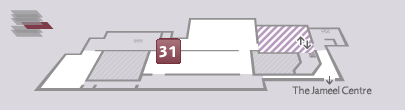
First floor | Room 31 | Islamic Middle East
-
First floor | Room 31 | Islamic Middle East
Objects are sometimes moved to a different location. Our object location data is usually updated on a monthly basis. Contact the Jameel Study Centre if you are planning to visit the museum to see a particular object on display, or would like to arrange an appointment to see an object in our reserve collections.
Galleries

Collection trails

Publications online
-

Islamic Ceramics
By the middle of the fourteenth century lustre production had gone into serious decline in Iran. Two objects and a small number of inscription tiles and tombstones ranging in date from 1418 – 1560 are all the evidence of its survival prior to c. 1650. Then there appears to have been something like a renaissance, with objects decorated in lustre, becoming common once more, and the quality of workmanship often of a very high standard.
Both in colour of lustre, and in design, there are major changes from earlier traditions. The bright, golden lustre now gives off a rich purple reflection, which adds to the luxurious impact of the finest pieces. The decoration includes animals (here an antelope and two foxes), birds, cypress trees and a variety of flowers, densely painted, but in a delicate, naturalistic style. These almost certainly derive from the gold-painted, marginal illuminations of contemporary books, while the more formal arabesques in cartouches around the rim of the plate illustrated here can be imagined framing frontispieces or illustrations in such works. Once again we see how innovation in Islamic ceramic design was so often due to the influence of manuscript illuminators (cf. nos. 13-14 [EAX.3102 & EA1956.36]).
© 2013 University of Oxford - Ashmolean Museum